
 See Our Latest Article on HelloNation
Knee pain can often be reduced without medication, especially when it is related to overuse, mild strain, stiffness, or weakness around the hip and leg. Helpful approaches include temporarily reducing aggravating activities, using cold or heat appropriately, improving strength and mobility, and gradually returning to normal movement.
The right strategy depends on the cause. Knee pain after a fall, twist, or collision should be treated differently from pain that developed gradually during walking, exercise, household work, or prolonged sitting.
What can cause knee pain?
Knee pain may come from irritated muscles or tendons, a sprain, cartilage problems, arthritis, bursitis, or an issue affecting movement at the hip, ankle, or lower back. Pain may also develop when activity increases suddenly, such as beginning a new exercise routine, walking more during warmer weather, or spending extra time on stairs and uneven ground.
In Wilton, seasonal changes can influence daily movement. Snow, ice, muddy ground, and uneven outdoor surfaces may increase slipping risk or encourage people to move differently. Indoor activities such as prolonged sitting, kneeling during home projects, or repeated stair use can also contribute to stiffness and irritation.
Pain location provides clues but does not establish a diagnosis. Pain around the kneecap may worsen with stairs or sitting for a long time, while pain along the joint line may be associated with twisting or cartilage irritation.
Should activity be stopped completely?
Usually, no. Relative rest is generally more useful than complete inactivity. Stop or reduce the specific movement that clearly increases pain, but continue comfortable activity when possible.
For example, a person may temporarily replace deep squats or running with:
- Short, level walks
- Gentle cycling with low resistance
- Water-based exercise
- Easy range-of-motion movements
- Upper-body activity that does not strain the knee
A useful guide is how the knee responds later that day and the following morning. If swelling, limping, or pain noticeably increases, the activity was probably too demanding. Reduce the duration, speed, depth, or frequency rather than pushing through the same level of discomfort.
How can ice, heat, elevation, and support help?
Cold may help after a recent injury or after activity that causes swelling. Place a cold pack wrapped in a thin towel over the knee for about 15 to 20 minutes. Avoid applying ice directly to the skin or leaving it on while sleeping. ([mayoclinic.org](https://www.mayoclinic.org/diseases-conditions/knee-pain/diagnosis-treatment/drc-20350855?utm_source=openai))
Heat may be more comfortable for stiffness without visible swelling, particularly before gentle movement. A warm shower or heating pad set to a comfortable temperature can make the knee feel less restricted, but heat should not be used over an acutely swollen or hot joint.
If swelling is present, resting the leg in an elevated position may help. A light compression sleeve can provide comfort, but it should not cause numbness, tingling, discoloration, or increased pain. Support should not be used to hide symptoms while continuing an activity that is causing harm.
Which exercises may help?
Strengthening the muscles around the hip and knee can improve control of the leg and reduce stress during walking, stairs, and standing. Exercises should be gentle at first and performed within a tolerable range.
Common starting options include:
- Quadriceps tightening: Lie or sit with the leg extended, tighten the front thigh muscle, and hold for several seconds.
- Straight-leg raises: With one knee bent and the other leg straight, tighten the thigh and slowly lift the straight leg a short distance.
- Glute bridges: Lie on the back with knees bent and lift the hips gradually while keeping the knees aligned.
- Sit-to-stand practice: Rise from a firm chair and sit back down slowly, using a higher seat or hand support if needed.
- Calf and hamstring stretches: Stretch gently without bouncing or forcing the knee into pain.
The American Academy of Orthopaedic Surgeons includes strengthening, stretching, and low-impact conditioning in its knee conditioning guidance. Exercise can cause mild temporary muscle soreness, but sharp pain, significant swelling, locking, or worsening instability is a reason to stop and reassess. ([orthoinfo.aaos.org](https://orthoinfo.aaos.org/globalassets/pdfs/2023-rehab_knee_10-16-23.pdf?utm_source=openai))
Can walking technique and footwear make a difference?
They can. Shorter steps, a steady pace, and avoiding sudden turns may reduce strain while the knee is irritated. On slippery winter surfaces, taking smaller steps and allowing extra time can reduce the twisting motions associated with falls.
Footwear should feel stable and comfortable, with enough room for the toes and adequate cushioning for the person’s walking pattern. Shoes do not need to be expensive or specialized. The practical goal is to avoid worn-out soles, unstable footwear, or shoes that encourage limping.
A cane or railing may temporarily improve safety for someone who is having difficulty bearing weight. A support should be used correctly rather than used to continue an activity that causes substantial pain.
What daily habits can reduce recurring knee pain?
Small changes may reduce repeated irritation:
- Alternate sitting, standing, and walking instead of remaining in one position for hours.
- Use a pad or raised surface for tasks that require kneeling.
- Break snow shoveling, yardwork, or home maintenance into shorter periods.
- Warm up before exercise and increase activity gradually.
- Keep frequently used household items within easy reach to reduce repeated deep bending.
- Maintain general leg strength throughout the year rather than exercising only during an active season.
Weight changes may also affect knee load, but pain should not be reduced to body weight alone. Strength, joint mobility, sleep, previous injuries, work demands, and movement habits all matter.
When is knee pain a reason to seek medical evaluation?
Some symptoms should not be managed only at home. Prompt evaluation is appropriate if the knee cannot bear weight, gives way, becomes markedly swollen, locks, looks deformed, or developed severe pain after a twist, fall, or impact. Sudden swelling, redness, warmth, or fever can indicate a more serious problem and requires timely medical attention. ([mayoclinic.org](https://www.mayoclinic.org/symptom-checker/knee-pain-in-adults-adult/related-factors/itt-20009075?utm_source=openai))
For less urgent symptoms, evaluation is sensible when pain persists despite reducing aggravating activity, repeatedly returns, interferes with sleep, or makes ordinary walking difficult. A qualified healthcare professional can help distinguish between a muscle-control problem, joint irritation, ligament injury, arthritis, or another cause.
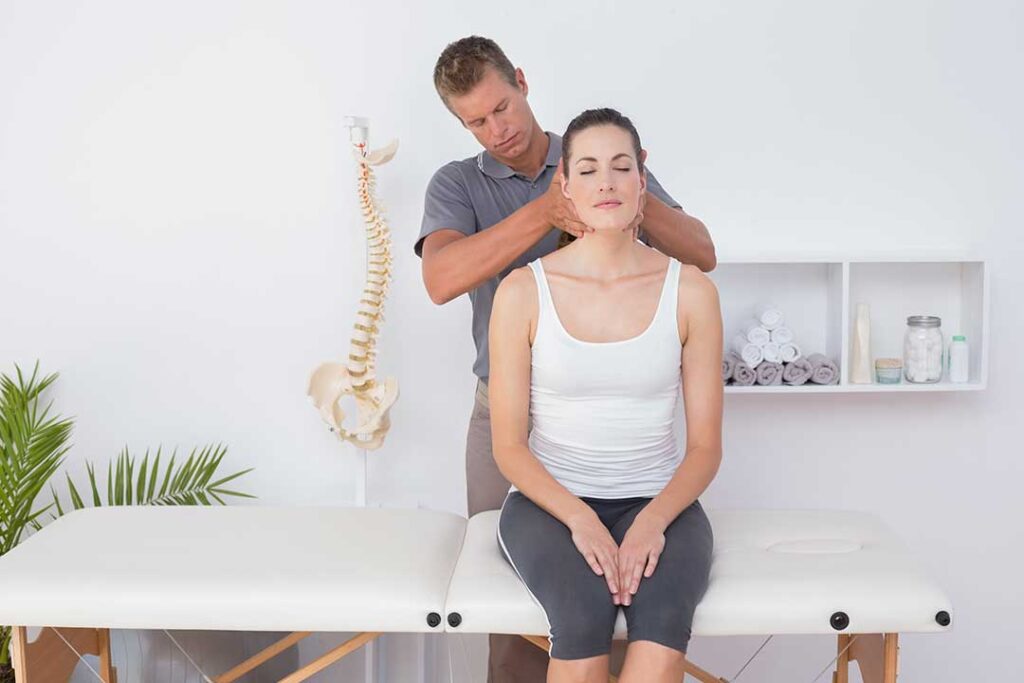
Chiropractic education often emphasizes how the spine, pelvis, hip, ankle, and knee work together during movement. That broader view can be useful, but knee pain should not automatically be attributed to alignment. A careful history, movement assessment, and medical evaluation when indicated are more reliable than assuming one cause.
The safest medication-free plan is usually gradual: calm the irritation, keep the joint moving comfortably, rebuild strength, and use symptoms as feedback rather than as a challenge to ignore.
